LS Homes
3D Gaussian Splatting for Real Estate
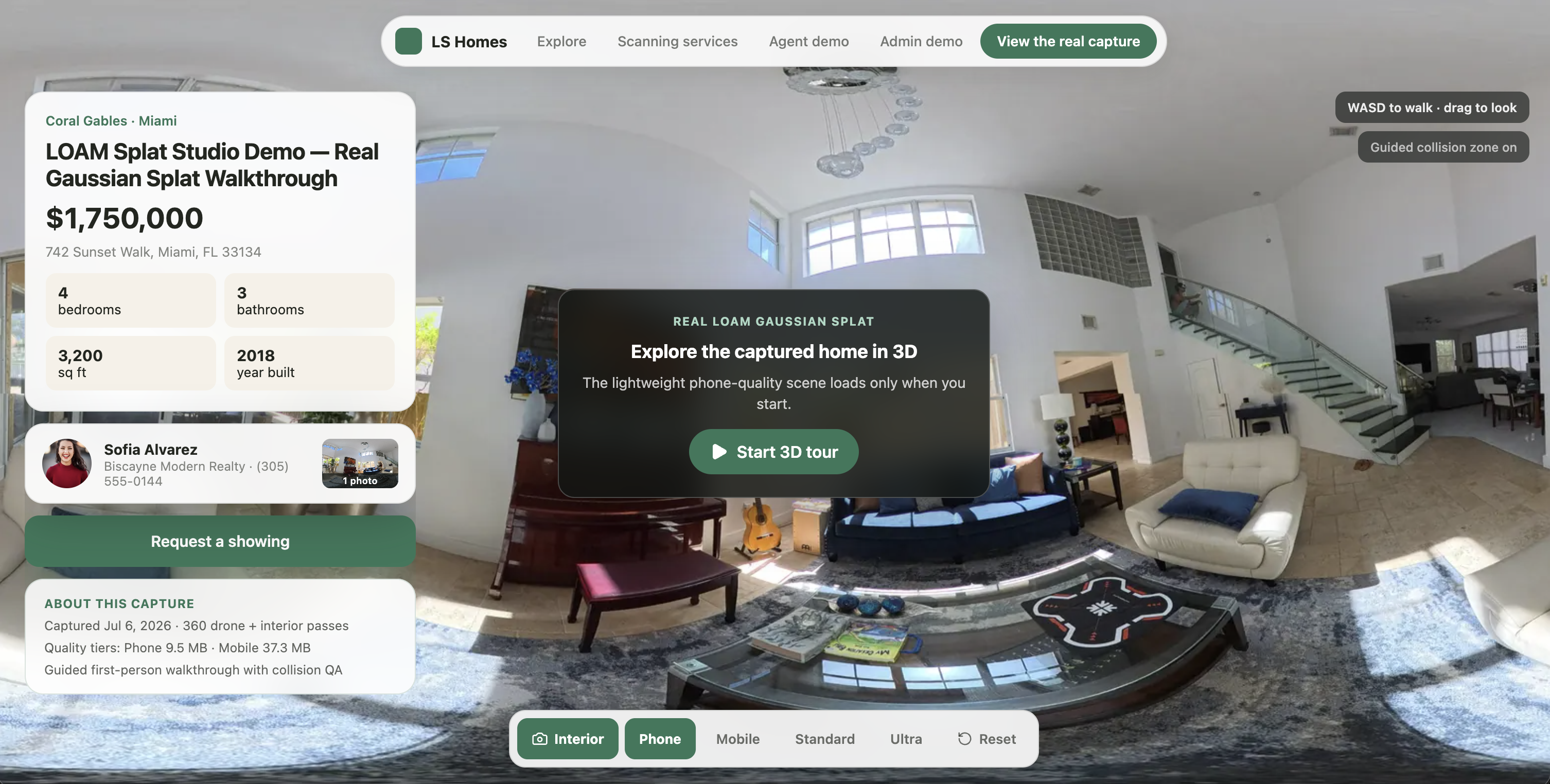
3D Gaussian Splatting for Immersive Home Tours
An ongoing experiment using 3D Gaussian Splatting to create more immersive real estate experiences for the web and Apple Vision Pro.
At a Glance
- Project type: Personal exploratory Proof of Concept
- Core tools: 3D Gaussian Splatting, COLMAP, Postshot, Blackmagic Camera app, custom web application
- Status: Active PoC and in development
Links
The Catalyst
I first discovered 3D Gaussian Splatting while sitting at the dinner table. My father-in-law was scrolling through YouTube on the television when he came across a video about a creator who had captured a workspace using a drone.
At the time, I did not own a drone, but I did have an Apple Vision Pro and was already developing 3D projects. The technology immediately caught my attention, so much so that I bought a drone—the first of many.
My initial hypothesis was:
Could 3D Gaussian Splatting create a more immersive way to explore real estate listings than traditional photo galleries and click-through virtual tours?
The Solution
While waiting for my first drone to arrive, I began experimenting with my iPhone. My first subject was my car.
That experiment eventually led to a broader concept: using Gaussian Splats to let people experience homes as if they had been transported inside them.
The project currently supports:
- Capturing source footage with an iPhone, gimbal, or 360 camera
- Processing 360 video files such as
.insv - Training Gaussian Splats through a custom web application
- Exporting the resulting
.plymodels - Displaying the models in an immersive home-listing concept called LS Homes
Architecture and Technical Decisions
For my initial car scan, I used a gimbal and an iPhone. I captured the video with the Blackmagic Camera app, locked the white balance, and used the fastest shutter speed I could reasonably use while maintaining the correct exposure.
I made these choices to keep the colors consistent and reduce motion blur in the training data. I then imported the footage into Postshot, a paid Gaussian Splatting application. After approximately 45 minutes of processing, I received the result and was impressed by how effectively the footage had been reconstructed.
As the project evolved, I wanted a workflow that was better suited to my own process. I built a custom web application on my PC around COLMAP, an open-source tool that could be adapted for the project.
The application allows me to:
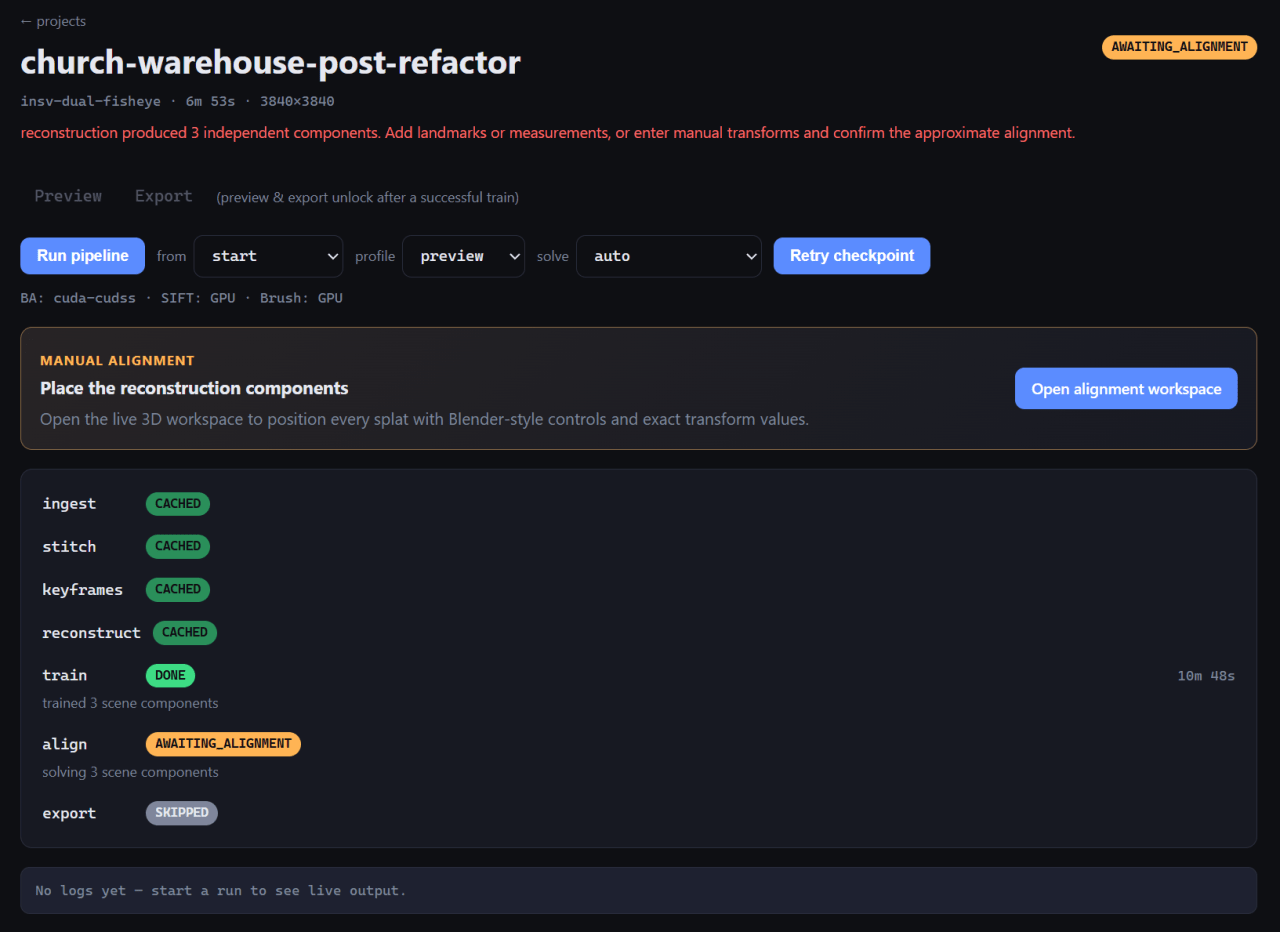
- Upload 360 video files.
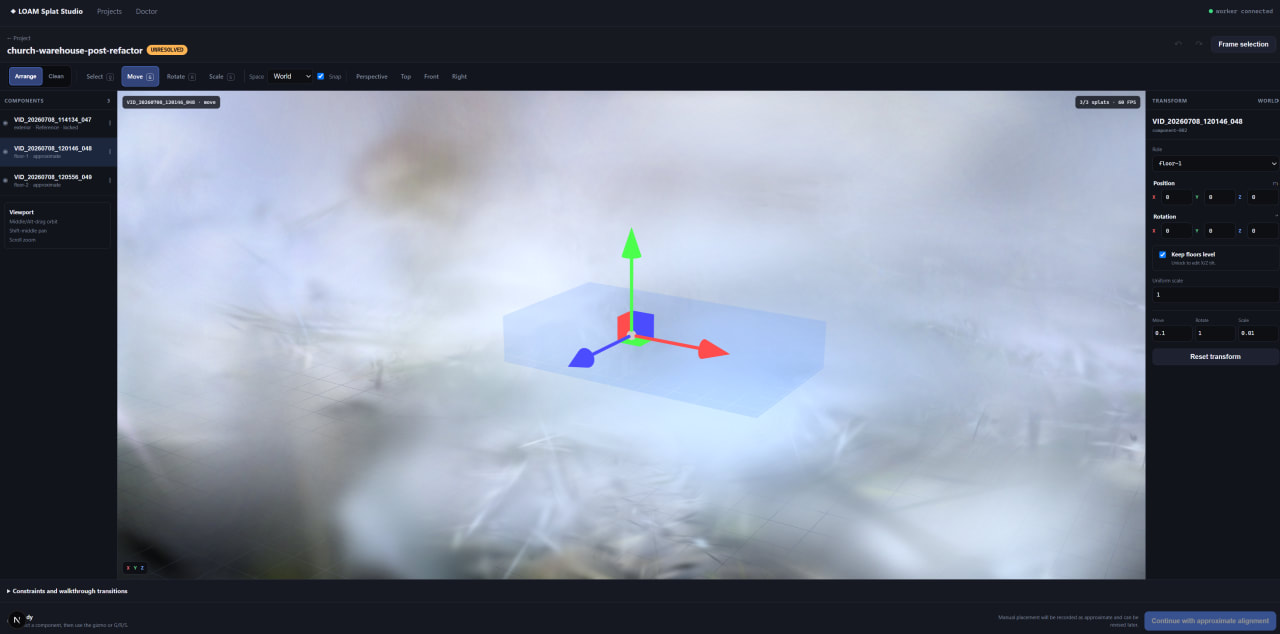
- Process and train the source footage.
- Export the resulting
.plymodel. - Use the exported model in another project, such as LS Homes.
I was able to build the custom workflow by leveraging AI coding models, including Codex and Claude. This allowed me to experiment quickly while tailoring the application to the specific steps I repeat during the capture and processing process.
Challenges and Pivots
The project began as a simple experiment with an iPhone and a single object. After seeing the results, I started thinking about where the technology could provide immediate value.
While walking my dog, I noticed that many homes in my neighborhood were being renovated or prepared for sale. That made me think about existing real estate platforms such as Zillow, where properties often use click-through 3D tours created with LiDAR-based systems such as Matterport.
Those tours are useful, but I believed there was an opportunity to make the experience feel more immersive and interactive—closer to exploring a video game than clicking between fixed viewpoints.
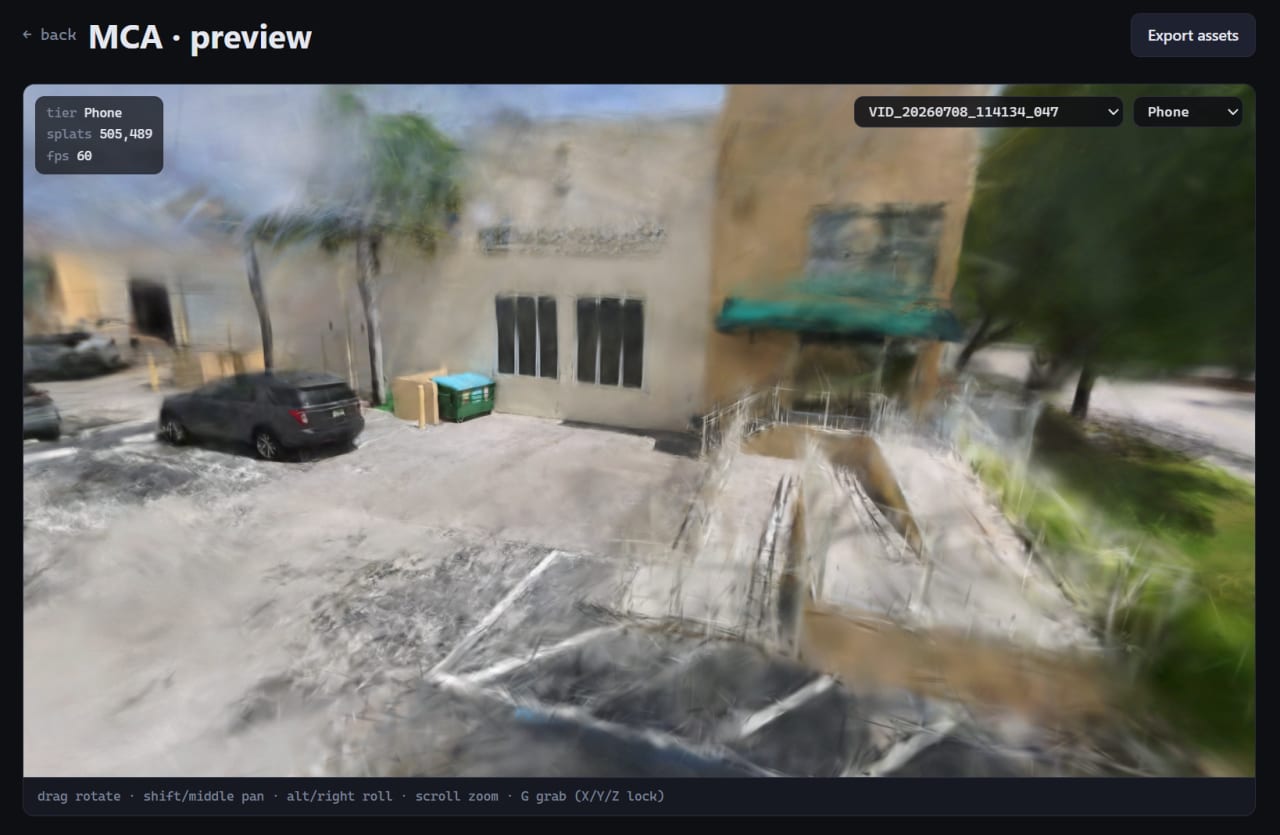
The other major challenge has been improving the quality of the resulting splats. The current workflow still needs better methods for cleaning floaters and improving visual fidelity.
Current Status and Impact
This project is an active Proof of Concept.
The custom application can currently process 360 video, train a Gaussian Splat, and export the resulting .ply model. The LS Homes concept uses that output to demonstrate how Gaussian Splatting could support more immersive home listings.
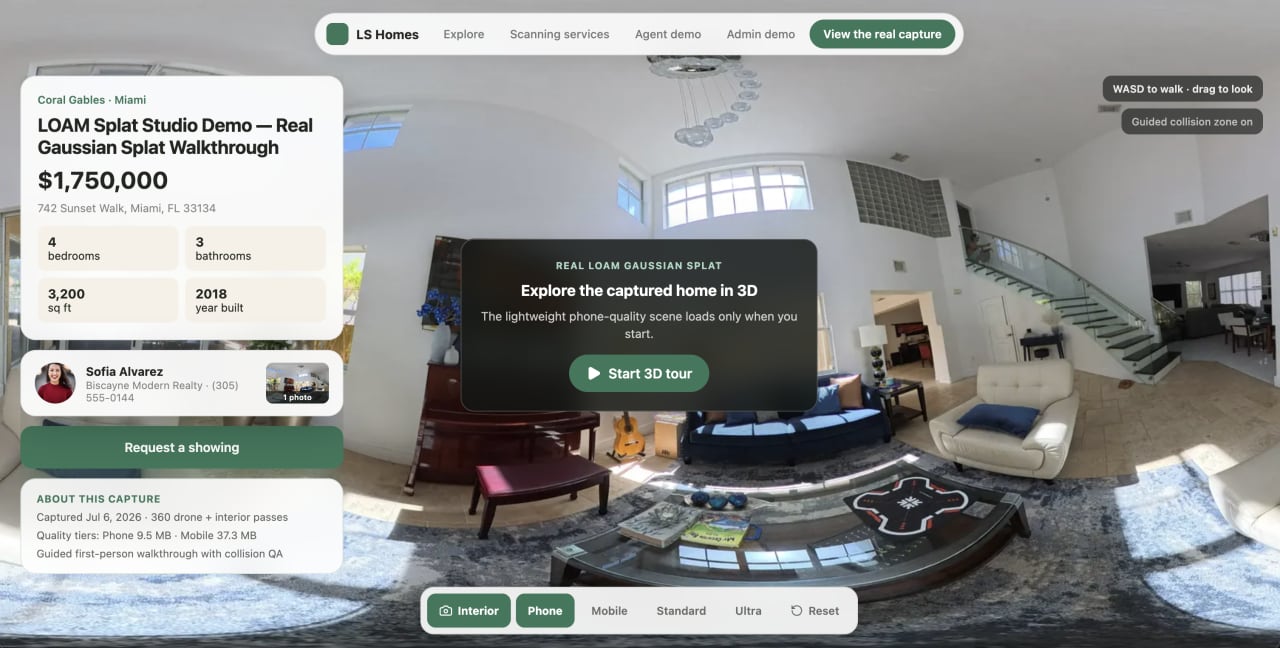
A live preview of the 3D tour and website is available here.
Both the custom training application and the LS Homes website are still being developed. The current implementation demonstrates the core workflow, but it is not yet a finished production system.
Roadmap and Lessons Learned
Planned improvements include:
- Cleaning floaters from generated Gaussian Splats
- Improving the visual fidelity of the models
- Developing a workflow for combining multiple splat datasets
- Streamlining the process from capture to web display
- Eventually bringing the experience to Apple Vision Pro
This project taught me that the quality of a Gaussian Splat depends heavily on the capture process. Decisions such as camera movement, shutter speed, exposure, and white balance directly affect the training data and the final result.
I also learned that open-source tools combined with AI coding models can make it practical to build specialized workflows around emerging technologies. Instead of adapting my process to an existing application, I could build an application around the way I actually wanted to work.
The long-term goal is to make 3D Gaussian Splat capture easier to process and display on the web and, eventually, in spatial computing environments. I want the experience to feel less like viewing a listing and more like being transported into another space.